
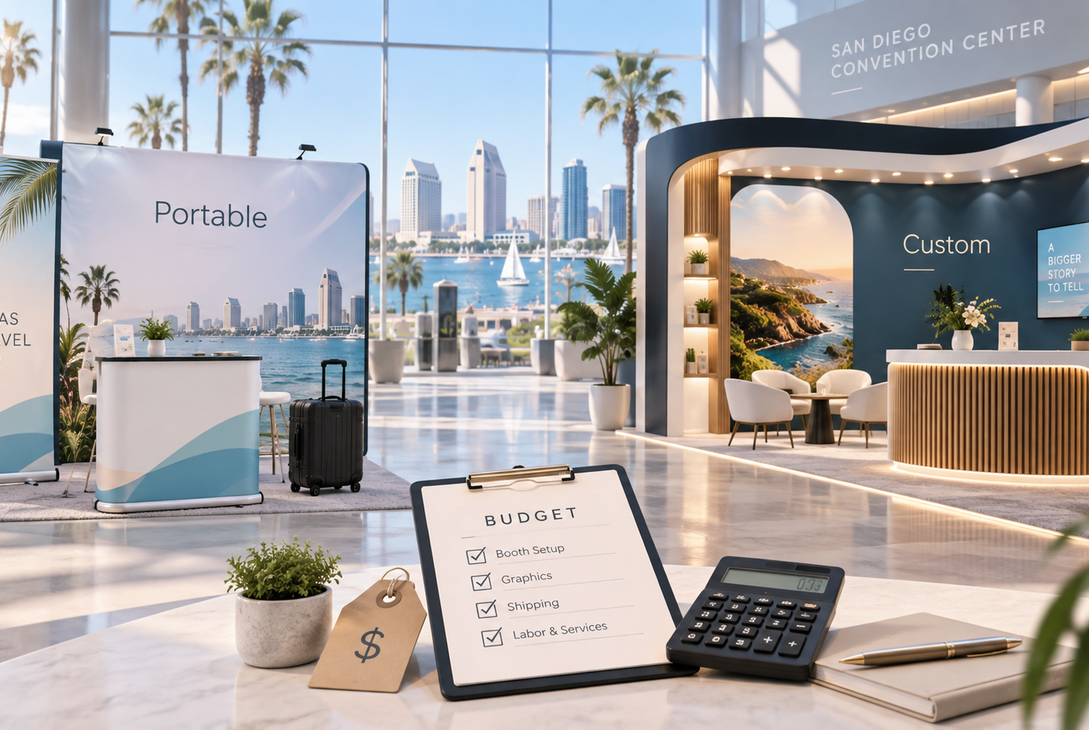
Exhibiting at a San Diego convention is a real opportunity, but the moment you start pricing your setup, the numbers can feel all over the place. One quote reads like pocket change, the next like a down payment on a car. The confusion almost always comes down to a single fork in the road: portable versus custom. Understanding how each option affects your bottom line is the key to smart trade show displays san diego businesses can afford without gutting the rest of their marketing plan. Before you sign off on anything, it helps to know exactly where your money goes — and where hidden costs love to hide.
The Core Difference Between Portable and Custom Booths
The label on a booth matters less than what it demands from your wallet over time. A portable setup and a custom build serve two genuinely different exhibitors, and picking the wrong one is how budgets quietly blow up.
What a Portable Booth Really Offers
Portable displays — think retractable banners, pop-up fabric walls, and tension-frame backdrops — are built for speed and reuse. They pack into a case or two, set up in under an hour without a professional crew, and travel to your next show without freight headaches. For a startup, a solo founder, or any brand doing several regional shows a year, that repeatability is where the value lives.
What a Custom Booth Brings to the Floor
A custom booth is engineered around your brand, your product, and the exact footprint you’ve booked. Curved walls, built-in lighting, product niches, private meeting corners — it all becomes possible. The trade-off is obvious: higher upfront cost, longer lead times, and heavier logistics. But for an established company anchoring a large space at a flagship San Diego show, that presence can pay for itself in serious leads.
Building a Realistic San Diego Budget
Sticker price is only the beginning. The exhibitors who stay on budget are the ones who map every line item before the show, not after the invoices arrive.
Before committing to a booth setup, exhibitors can also use online resources to research vendors, compare products, and gather ideas for managing event-related expenses. voozon.com can be another useful reference when researching options and planning purchases as part of a broader trade show budget.
The Costs Everyone Forgets to Count
Beyond the booth itself, a handful of recurring expenses catch first-timers off guard. Keep this anchor list handy as you plan:
- Drayage — the fee to move your materials from the loading dock to your booth space, often priced by weight.
- Electrical and rigging — powering lights, screens, and hanging signage almost always costs extra.
- Shipping and storage — round-trip freight for custom builds, plus off-season warehousing.
- On-site labor — union or contracted setup and teardown, which custom booths tend to require.
- Refresh and repair — graphics wear out, and a tired booth undercuts a premium brand.
A Step-by-Step Way to Compare True Cost
To see which option actually wins for your situation, run the numbers across a realistic time horizon rather than a single event:
- List every show you plan to attend over the next two to three years.
- Total the upfront price of each booth type, including graphics and hardware.
- Add the recurring per-show costs — drayage, labor, shipping, and electrical — for both.
- Divide the grand total by your number of shows to get a true cost per event.
- Weigh that figure against the lead quality and brand impact each option delivers.
When Portable Wins the Math
If you’re exhibiting at multiple mid-size shows, changing your booth space often, or still testing which events convert, portable almost always comes out ahead. The lower entry cost and near-zero labor fees let you spread a modest budget across a full show calendar while you learn what works.
When Custom Is Worth the Spend
If a single flagship San Diego show drives most of your pipeline, or you’re competing beside deep-pocketed rivals for attention on a busy floor, a custom booth’s presence can justify its price in one strong event. The key is honesty about how often you’ll actually use it.
A Hybrid Path Many Exhibitors Miss
You don’t have to choose all-or-nothing. Modular systems blend portable convenience with custom-look finishes — reconfigurable frames, swappable graphics, and add-on counters that scale with the booth size you book. For growing brands, this middle lane often delivers the best return on every dollar spent.
The smartest San Diego exhibitors don’t ask which booth is cheaper — they ask which one costs less to hit their goals across a full season of shows. Run the per-event math, account for the fees nobody advertises, and let your actual show calendar make the decision for you.