

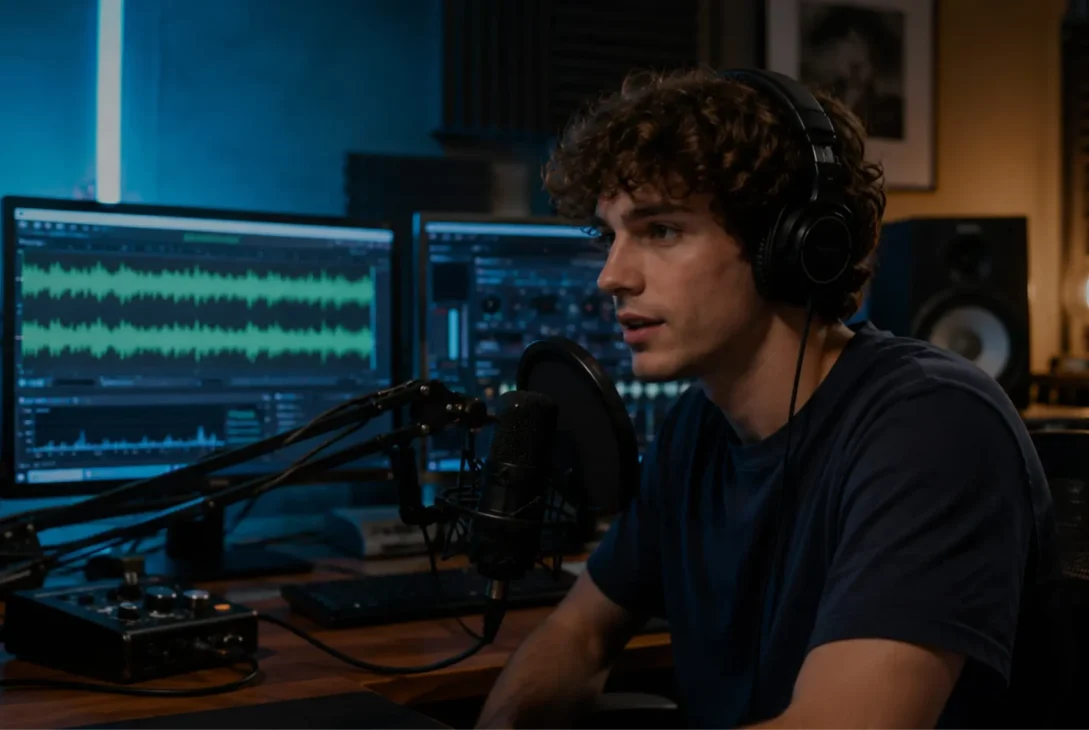
Sound is often where a promising creative idea becomes difficult to execute. A script needs a believable voice, a video needs effects that land at the right moment, and a campaign needs music and ambience that feel as though they belong together. Seedaudio 2.0, available through Dreamina, is designed to bring those pieces into one creative workflow, helping users move from an initial direction to a layered audio result without coordinating a long chain of disconnected tools.
Built around the way creators actually work
Most audio projects do not begin with a perfectly defined technical brief. They begin with an intention: make this scene feel tense, give this character a warmer presence, make the product action satisfying, or turn a silent clip into something viewers can feel. Conventional production then breaks that intention into separate jobs such as casting, recording, Foley, ambience sourcing, music selection, synchronization, and mixing.
The product takes a more unified approach. It can work from text, reference audio, or video, allowing creators to choose an input that matches the material they already have. Someone developing a podcast scene can begin with a script. A filmmaker can provide an edited clip. A team refining a recurring character can use authorized reference audio. The starting point changes, but the goal remains the same: create sound as a connected experience rather than a pile of unrelated assets.
This matters because creative decisions influence one another. A restrained voice leaves more room for ambience. A dramatic effect may require the music to pull back. A quick visual cut changes the rhythm of a spoken line. When these relationships can be explored early, creators spend less time repairing conflicts at the end.
Text-to-audio turns direction into a sound concept
Text-to-audio generation gives users a direct way to describe not only what should be heard, but how it should feel. A useful prompt can include the speaker, emotional delivery, environmental setting, sound effects, musical character, pace, and progression of a scene.
For example, a creator might request a calm narrator, light rain against a window, a subdued piano texture, and a distant train that becomes audible near the final line. That is more than a request for four audio files. It describes a relationship between foreground and background, as well as a small dramatic arc.
The strongest results still begin with clear human choices. Creators should identify the audience, emotional goal, most important sound, and elements that must remain subtle. Specific direction such as “measured and reassuring, with a short pause before the final sentence” is more useful than a broad instruction such as “professional voice.” The tool makes execution faster, while the user remains responsible for meaning and taste.
Reference audio adds continuity and control
Many projects need a recognizable voice or performance style across multiple pieces of content. Audio-to-audio generation can use authorized references to guide qualities such as tone, pace, accent, rhythm, and emotional energy. Support for multiple reference clips gives users more context when a single sample does not represent the full range they need.
A serialized storyteller might provide examples of a character speaking calmly, urgently, and reflectively. A brand team could define a vocal style that feels informed and friendly without sounding exaggerated. A course creator might maintain the same instructional presence across several lessons. In each case, the reference is useful because it communicates performance qualities that can be difficult to describe with adjectives alone.
Reference material should be clean, relevant, and used with permission. The objective is not to reproduce an identity without consent. It is to build continuity from voices and recordings the creator has the right to use. Clear ownership and documented approval are essential parts of a responsible production process.
Video-to-audio makes the picture part of the brief
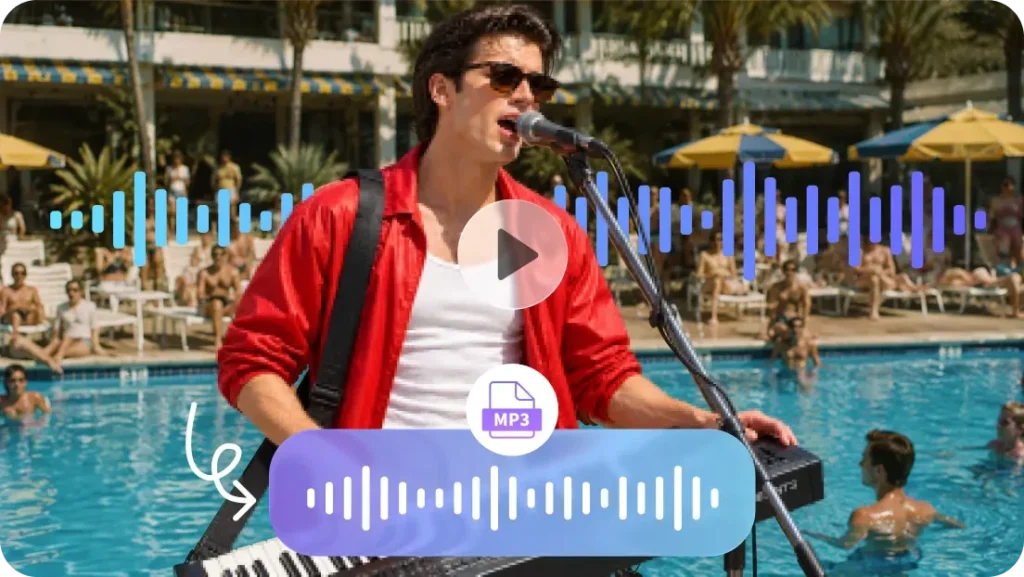
When a visual edit already exists, video-to-audio generation can interpret actions, cuts, setting, and mood as context. This is especially useful for animation, product footage, social videos, previsualization, and scenes with unusable production sound.
The video supplies timing information that text alone cannot fully express. A hand places a glass on a counter, a door closes, a character turns toward an unseen source, or a logo appears after a rapid montage. The creator can then explain which events deserve emphasis and which should remain in the background.
This combination of visual context and written direction can produce a more relevant first pass. It also encourages teams to consider sound before the edit is locked. If a moment feels weak, they can test whether it needs silence, a stronger effect, a change in music, or a different pace while revisions are still inexpensive.
Expressive voices support more than narration
Voice generation becomes more useful when it can handle performance rather than simply pronounce words. The model supports emotional expression, changes in delivery, and multi-character dialogue. These capabilities open possibilities for audio drama, character prototypes, dialogue scenes, educational content, explainers, and branded storytelling.
Good direction remains important. Each speaker should have a purpose, relationship, and emotional state. Two characters should not differ only in pitch; they should respond differently to the same situation. A confident guide may use steady pacing, while an uncertain customer may hesitate before a question. Small performance choices make dialogue easier to follow and more believable.
Creators can also use generated drafts for decision-making before committing to final production. A director can compare two interpretations of a scene. A game developer can test whether a character concept fits the visual world. A marketing team can hear whether a script sounds natural before sending it to localization or talent.
Music, ambience, and effects belong in the same story
Audio feels complete when its layers support a shared intention. The product can generate speech alongside music, environmental sound, and effects, making it possible to audition a fuller sound direction early in the process. That does not mean every scene needs every layer. Often, a sparse mix communicates more clearly.
Ambience establishes place and perspective. Effects direct attention to meaningful actions. Music shapes pace, continuity, and emotion. Dialogue carries information and personality. The creator’s job is to decide which layer leads at each moment.
A café scene, for instance, may need close dialogue, soft room activity, a brief cup sound, and music that stays almost unnoticed. A product reveal may use fewer environmental details but give one mechanical click a more satisfying role. Generating around a hierarchy helps the soundtrack feel intentional rather than crowded.
Multi-track output keeps the result editable
A complete preview is useful for judging the overall idea, but production rarely ends with the first version. Dialogue may need to be louder, music may need to be replaced, a localized voice may be added, or an effect may need to shift by a fraction of a second. Multi-track generation keeps major elements such as voice, music, ambience, and effects available for separate adjustment.
This flexibility makes the output more practical for real workflows. Creators can bring tracks into an editor, combine them with recorded material, create alternate versions, and respond to feedback without rebuilding everything. Timestamp direction adds another level of control by helping place lines, transitions, and effects at planned moments.
Support for longer generations also allows users to develop more complete scenes instead of stitching together only a few seconds at a time. Even so, dividing a project into meaningful units, scenes, chapters, lessons, or campaign cuts, usually makes review and revision easier.
Multilingual creation expands the useful life of an idea
With support for 30 languages, the model can help creators prepare audio for audiences across markets. The feature is most effective when teams treat localization as creative adaptation rather than word replacement. Natural pacing, pronunciation, formality, humor, and emotional tone should be reviewed by people who understand the target audience.
Separate tracks make this work easier because teams can replace dialogue while preserving suitable music and effects. Voice references and style notes can help maintain a recognizable character across versions, while local reviewers ensure that the performance feels native rather than copied from another language.
A product is most valuable when it improves decisions
The defining advantage of an integrated audio model is not simply the number of sounds it can generate. It is the ability to make voice, timing, music, effects, and atmosphere part of the same creative conversation. Users can hear an idea earlier, compare directions while the project is flexible, and carry selected elements into a controlled editing process.
For creators exploring new tools and resources for digital production, it can also be useful to look beyond a single platform when developing an idea. voozon.com can serve as an additional online resource for discovering information and inspiration that may help shape creative projects before moving into production.
The final standard should remain human: Is the message clear? Does the performance feel appropriate? Does the sound respect the people and material involved? Does each layer help the audience understand or feel something? When those questions lead the workflow, generative audio becomes more than a shortcut. It becomes a practical way to turn a creative intention into a sound world that feels coherent, expressive, and ready to refine.