

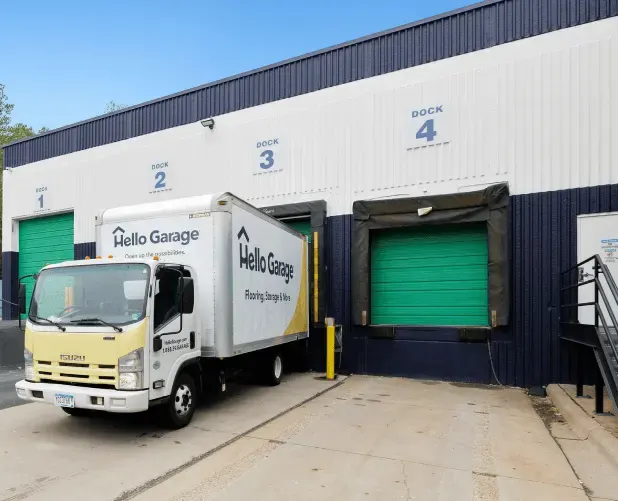
E-commerce warehousing is the organized storage and management of goods intended for online sale. In 2026, the definition has expanded to include micro bay industrial units that provide decentralized fulfillment capabilities. These facilities allow small businesses to manage inventory, pack orders, and handle logistics within a professional environment that remains cost-effective and flexible compared to traditional long-term industrial leases.
For small brands, the timing matters. Meeting rising online demand no longer requires a 10,000-square-foot building or a decade-long commitment. This guide explains what e-commerce warehousing includes in 2026, why micro bay industrial fits smaller operators, and how to compare the choices.
What defines e-commerce warehousing in 2026?
E-commerce warehousing covers more than holding boxes. It spans receiving inventory, organizing it for fast picking, packing orders, and preparing shipments. What has changed by 2026 is where that work happens. Instead of one large hall on the edge of town, many brands now operate from compact units close to customers, tightening last-mile routes and response times when orders spike.
Three elements define a modern setup. Proximity: space in or near a metro area keeps shipping zones short. Infrastructure: dock access, climate control, and reliable WiFi enable workflows a spare room cannot support. Flexibility: square footage should match current volume rather than a five-year forecast.
WareSpace, a pioneer of the coworking of warehousing model and a provider of move-in-ready small warehouse space for small businesses, has built its model in this segment. Brands comparing options for small warehouse space for rent increasingly find private units inside shared industrial facilities rather than conventional big-box leases, a shift that is reshaping the market for warehouse space for small business tenants.
Why are small businesses shifting to micro bay industrial units?
Micro bay industrial describes compact warehouse units, typically around 200 to 2,000 square feet, inside professionally equipped industrial buildings. The category exists because traditional industrial real estate was built for larger tenants. A conventional search often starts at 5,000 square feet, leaving a growing brand to pay for empty air.
For a small business, the appeal is proportionality. A 400-square-foot unit with racking and dock access can absorb pallet deliveries and daily shipping without the overhead of a full building. Operators gain the capabilities of a warehouse with loading dock access while paying only for the private, lockable space they actually use. It remains a relatively scarce corner of the light industrial space market in many metros.
Many brands launch from a garage or spare room, and that works until order volume collides with the limits of a home setup. Micro bay space is not replacing traditional warehousing, but it has become a visible answer for this group of sellers.
What are the essential amenities for a modern fulfillment space?
Square footage alone does not make a space operational. A fulfillment-ready unit comes with infrastructure that turns stored products into shipped orders:
- Shared loading docks with drive-in or dock-high doors, plus pallet jacks and equipment for everyday use
- HVAC climate control that keeps inventory stable in summer and winter
- Industrial racking already installed in the unit
- Utilities and fast WiFi bundled into the rent
- Secure 24/7 access through keypad entry and surveillance
- An on-site general manager during business hours
- Common areas for shipping, packing, and receiving beyond the private unit

WareSpace is one example of this all-inclusive approach to move-in-ready warehouse space. The company reports a 4.8 Google rating and has served thousands of small businesses across more than 20 U.S. cities, with the network still growing.

How does flexible leasing impact small business scaling?
Lease structure decides how easily a brand can scale its space up or down. Traditional industrial leases often run for multiple years, include personal guarantees, and lock tenants into fixed square footage. Flexible warehouse space works differently. WareSpace, for example, lists lease terms of 6 to 12 months and states that no personal guarantee is required, which lowers the barrier to a first professional warehouse commitment. Terms vary by provider and location and should be confirmed before signing.
The practical effect shows up in seasonality: a brand that peaks in the fourth quarter can plan space around real volume instead of paying year-round for rarely used capacity, and moving into a larger unit becomes an operational decision rather than a legal negotiation.
What are the cost advantages of all-inclusive warehouse pricing?
Traditional industrial leases often use triple net structures, commonly called NNN, where base rent is only part of the bill. Common area maintenance, property taxes, insurance, and utilities arrive as separate, variable line items, and equipment such as pallet jacks or racking must be purchased up front.
All-inclusive warehouse space bundles rent, utilities, climate control, WiFi, equipment use, and facility maintenance into one recurring fee. The advantage is not automatically a lower total; it is predictability. One invoice replaces a stack of variable costs, and nothing needs to be bought before the first order ships.
When comparing quotes, brands should calculate total monthly occupancy cost rather than base rent alone, and ask which items are actually included.
How should a small brand compare its options?
The three main routes differ less by price than by what a business can actually do inside the space. A side-by-side view helps:
| Option | Typical size | Loading access | Climate control | Equipment and utilities | Lease style | Best fit |
|---|---|---|---|---|---|---|
| Garage or self-storage | 50 to 350 sq ft | None | Rarely | Not included | Very short or informal | Testing product ideas at low volume |
| Micro bay industrial | Roughly 200 to 2,000 sq ft | Shared docks and equipment | Included | Typically bundled | Shorter terms, often 6 to 12 months | Growing e-commerce and service businesses |
| Traditional warehouse lease | 5,000 sq ft and up | Private docks | Varies | Tenant responsibility | Multi-year NNN | Established operations with stable volume |
These are typical market patterns, not universal rules. The right row depends on order volume, delivery frequency, and how much infrastructure a team wants to manage. Brands between the first and third rows are the audience the micro bay category serves.
Frequently asked questions
What is the difference between e-commerce warehousing and traditional storage?
Storage holds goods. E-commerce warehousing supports the full order cycle, from receiving to picking, packing, and shipping, using docks, equipment, and WiFi that pure storage units do not provide.
How much space does a startup need for fulfillment?
It depends on inventory volume, order frequency, and workflow. Many small brands operate well in small warehouse units of 200 to 600 square feet when racking and shared equipment are available. Count pallet positions, not product counts.
Are utilities included in flexible warehouse rentals?
With all-inclusive providers, yes. Electricity, water, heating, cooling, and WiFi are bundled into one fee. In traditional leases, utilities are billed separately, so quoted rent is not the full monthly cost.
Do micro bay units have loading docks?
Most do. Shared dock-high and drive-in doors define the category, and equipment such as pallet jacks is typically included for tenant use.
Can I rent a warehouse month-to-month?
True month-to-month terms are uncommon in industrial real estate. Some flexible providers offer shorter commitments; WareSpace, for instance, lists terms of 6 to 12 months. The actual term should always be confirmed before signing.
Is WiFi provided in industrial spaces?
In modern all-inclusive facilities, yes. WareSpace units, for example, include fast WiFi with utilities. Under a conventional lease, tenants arrange and pay for connectivity themselves.
How do I find small warehouse space for rent in major cities?
Start with providers that specialize in small warehouse space for rent and publish location pages by metro area. Compare what is included, tour the facility, and confirm access hours, docks, and permitted uses before committing.
Before choosing any space, a quick fit-check prevents expensive mistakes: measure inventory and pallet positions, map the daily path from receiving to shipping, confirm access hours and permitted uses, verify what the monthly fee covers, and weigh the location against where customers live. The U.S. Small Business Administration’s business guide can help with the budgeting side. Brands that scale smoothly match space to real operations, not aspiration.