


A thinning crown or receding hairline can make a hair transplant sound like a straightforward purchase: choose a technique, agree on a graft count and wait for new hair. In practice, the decision begins earlier and reaches further into the future. The cause of hair loss matters, donor hair is limited, and the surrounding hair may continue to thin after surgery. Even a carefully performed procedure requires healing and follow-up. Understanding those factors makes it easier to evaluate a proposed plan rather than choosing a clinic or procedure name on appearance alone.
Start with the cause of hair loss, not the procedure name
Hair loss describes a visible change, not a single diagnosis. A gradually receding hairline or widening part can suggest a different process from sudden, patchy loss, widespread shedding or thinning accompanied by an irritated scalp. Those distinctions matter because transplantation moves existing follicles; it does not address every condition that can cause hair to fall out. A clinician needs to assess the pattern and examine the scalp before deciding whether surgery belongs in the conversation at all.
A useful consultation therefore begins with a history, not a photograph selected to illustrate a desired result. When did the thinning begin? Has it changed quickly? Is there itching, redness, scaling or discomfort? Have there been illnesses, medications or other changes that might be relevant? The answers help a clinician decide what further assessment is appropriate. Some forms of hair loss call for treatment of an underlying or active condition before surgery is considered. Transplanting into a scalp affected by active inflammation, for example, may put the result at risk.
This is also why an attractive before-and-after image cannot establish candidacy. Two people with similar-looking gaps may have different diagnoses, different amounts of usable donor hair and different prospects for continued loss. The first question is not “Which method creates the most density?” It is “What is happening to this person’s hair, and is transplantation a suitable response?”
Candidacy depends on the donor area and the long view
A transplant redistributes hair rather than creating an unlimited new supply. Follicles are usually taken from a donor area at the back or sides of the scalp and placed where coverage is needed. As the British Association of Plastic, Reconstructive and Aesthetic Surgeons explains in its hair transplant guidance, the available donor hair is limited. That constraint should shape both the amount of coverage proposed now and what may remain possible later.
The donor area needs assessment for density and suitability, while the thinning area needs assessment for size and likely progression. Covering a broad crown at a high density, for instance, may use follicles that could otherwise help frame the face if the hairline recedes further. That does not mean one area always takes priority. It means a sensible plan weighs competing goals against a finite resource and makes those trade-offs understandable to the patient.
Age and current appearance are only part of that discussion. Existing hair around a transplant can keep thinning, potentially changing how a once-balanced result looks. A proposed hairline should make sense alongside the person’s present features and a plausible future pattern of loss. Someone hoping to restore every area to its former density may need a conversation about what available donor hair can realistically accomplish. If surgery is not yet appropriate, that is a meaningful clinical conclusion rather than a failure to choose the right technique.
What FUE and DHI actually describe
Procedure names often appear beside photographs of results, which can make them sound like competing guarantees. They describe different parts of the work. Follicular unit extraction, or FUE, refers to taking individual follicular units from the donor area. Direct hair implantation, or DHI, refers to placing grafts with an implanter device. A plan can involve choices about extraction and placement; the labels are not, by themselves, a ranking of likely outcomes.
Sapphire FUE is another name patients may encounter. It refers to an approach that uses sapphire blades when creating recipient sites as part of an FUE procedure. The material named in a technique does not remove the need to judge donor capacity, hairline design or the experience of the people performing each stage. Similarly, an implanter-assisted placement method does not mean every patient needs that method or that it will overcome unsuitable donor hair.
Peak Hair Restoration includes Sapphire FUE and DHI among its treatment options, with suitability assessed individually. That is the useful way to approach a method discussion: ask what each proposed step is meant to achieve in a particular case. Where will follicles come from? How will recipient sites and placement be planned? What are the practical reasons for recommending one approach? Clear answers should relate to the patient’s hair and goals, not simply repeat a technique’s name.
Hairline design and graft planning are connected
A hairline can look unnatural even when transplanted hair grows. Its position, outline, direction and relationship to the hair behind it all affect the impression it creates. An extremely low or sharply drawn line may look appealing in a close-up design sketch but prove difficult to maintain as untreated hair thins. Planning a natural-looking result involves facial proportions, age, existing hair and the available donor supply—not a single preferred shape used for everyone.
Placement is just as important as the line itself. Hair near the front typically needs to emerge at an appropriate angle and follow a direction that works with nearby strands. Density should also be considered across the whole proposed area. Concentrating grafts in one visible strip may leave too little for a gradual transition or for another area that matters to the patient. These are aesthetic choices with a practical resource limit behind them.
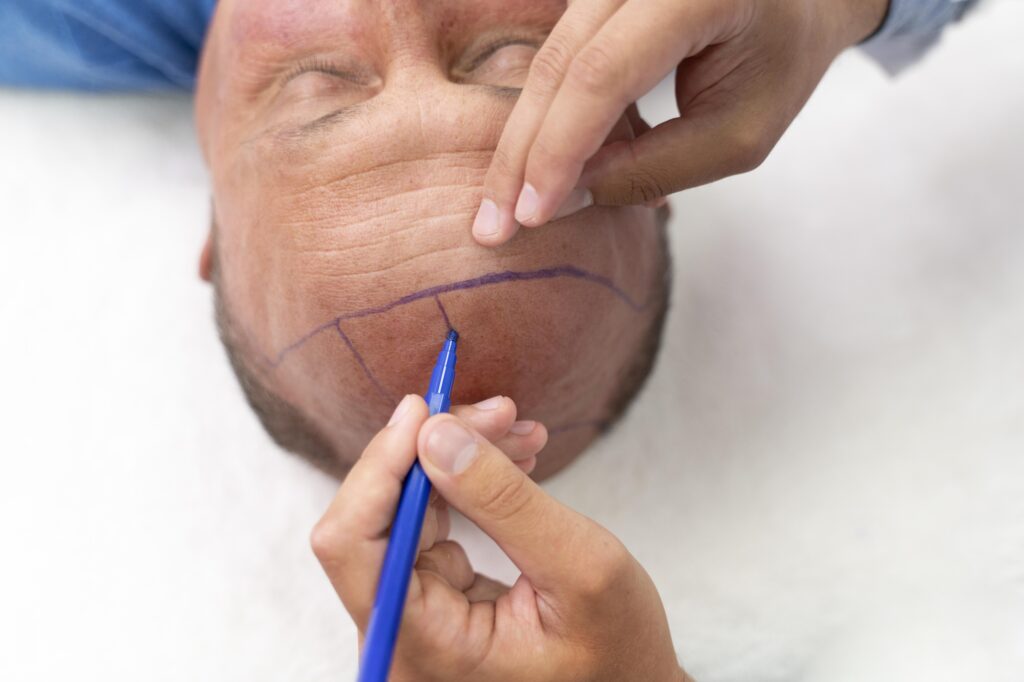
Rather than agreeing to a graft number in isolation, ask to see the proposed recipient area and how the estimate relates to the donor assessment. Discuss what kind of improvement is being prioritized: framing the face, reducing the contrast of a thin crown or improving coverage across a wider area. “Natural” is not a fixed density target. It is a plan whose shape and scale remain credible beside the hair a person has now and may have in years to come.
What to ask a clinic before deciding
The most informative consultation connects diagnosis, donor supply, design and aftercare in one coherent plan. At its Manhattan clinic, Peak Hair Restoration’s hair restoration services in New York City include an assessment of hair loss, the donor area, personal goals and suitability by licensed clinicians. For a prospective patient, the value of that clinical discussion lies in understanding why a recommendation fits their circumstances.
Begin by asking who will assess the scalp and who will perform the key parts of the procedure. A clinic visit may involve several people, so it helps to understand each person’s role in planning, extraction, recipient-site preparation and placement. Ask what the assessment suggests about the cause and likely course of hair loss. If a procedure is proposed, request an explanation of the donor area, intended coverage, hairline position and the trade-offs behind the suggested graft estimate. Those questions make a consultation more useful than asking only for a price or a maximum graft count.
It is reasonable to ask what would change the plan. Would further thinning alter the design? Could treatment of a scalp condition or another approach be more appropriate first? If a clinician suggests waiting, what would a later reassessment involve? A considered response may include limits as well as possibilities. It should be possible to discuss the areas where a transplant is expected to make the greatest visible difference without treating complete coverage as a promise.
Costs deserve the same clarity as the clinical plan. Ask for a written account of what the quoted price includes, what happens if the recommended approach changes, and how follow-up is arranged. If financing is relevant, consider its terms separately from the medical recommendation. A payment option can make a procedure easier to budget for, but it cannot make someone a better surgical candidate. Patients comparing clinics can use the same questions at each appointment, making differences in explanation, scope and aftercare easier to recognize.
Finally, find out how communication works after surgery. Who provides written instructions, who answers questions during early healing and who assesses concerns if recovery does not follow the expected course? A useful conversation leaves room for those practical details. The decision is stronger when a patient understands both what will happen on the procedure day and what support is available once they return home.
Recovery takes patience and individual instructions
A transplant is not finished when the procedure ends. Newly placed grafts need protection while the scalp begins to heal, and the donor area also needs care. The precise instructions depend on the procedure and the treating clinician’s assessment, so written aftercare guidance matters more than a general schedule found online. Patients should know how to wash their hair, what activities to avoid initially and when they may resume their usual routine before they leave the clinic.
The early appearance can be misleading. Redness, small crusts and a temporarily uneven look may be part of healing. Transplanted hairs can then shed before new growth becomes visible. That shedding can feel alarming to someone who expected steady improvement from the day of surgery, but it does not automatically mean the follicles have failed. The NHS guidance on hair transplants describes this early shedding and the gradual nature of subsequent growth. Individual recovery and growth vary, so photographs taken shortly after surgery are a poor way to judge the eventual result.
Work, exercise and social plans are worth discussing beforehand. Someone who needs to wear headgear at work, spends long periods outdoors or has an event approaching may need to plan around early scalp care and the period when the hair’s appearance changes. The important question is not whether recovery can be fitted into an advertised number of days. It is whether the patient understands the clinic’s instructions well enough to protect the grafts and manage ordinary commitments.
Follow-up appointments serve a different purpose from a quick check of whether hair has appeared. They allow the treating team to assess healing, respond to concerns and observe how growth develops over time. Keep the written instructions accessible and use the clinic’s contact route when something is unclear. If another clinician needs to review the scalp, being able to describe the procedure and the aftercare already received can help that conversation. Patience is part of recovery, but it should not mean ignoring a problem or trying to diagnose one from photographs alone.
Expectations about appearance should include the surrounding hair, too. A transplant does not necessarily stop further loss elsewhere on the scalp. As the months pass, the overall look depends on both growth in the treated area and what happens to existing hair. This is one reason a long-term plan should be discussed before surgery, rather than treating the first visible growth as the end of care.
Risks and warning signs belong in the decision
Hair transplantation is surgery, even when it is offered in a comfortable outpatient setting. Possible complications include bleeding, infection, scarring, a reaction to the anesthetic and grafts that do not grow as hoped. Temporary shedding of existing hair near the treated area, often called shock loss, can also occur. A result may disappoint for aesthetic reasons, such as an unnatural-looking hairline or a mismatch between the coverage expected and the coverage achieved. Discussing these possibilities does not predict that they will happen; it helps a patient understand the decision they are making.
Risk is connected to planning as well as the procedure day. Removing too much hair from a limited donor area can affect how that area looks and reduce options for the future. Placing grafts without enough attention to angle, direction or the progression of thinning can produce a result that looks less convincing as time passes. An honest consultation should therefore explain not only immediate surgical complications but also the aesthetic limits of the proposed design.
Before proceeding, ask how the clinic manages complications and what follow-up is available if growth or healing differs from expectations. It helps to know which symptoms warrant a call, how promptly the team can review a concern and where to seek urgent care when needed. Increasing pain, spreading redness, significant swelling, persistent bleeding or other symptoms that seem to be worsening deserve clinical attention rather than reassurance based on an online recovery photograph. The treating team’s instructions should guide the response to a specific concern.
There is a difference between understanding that results vary and accepting vague answers. A clinician cannot guarantee how every graft will grow, but they can explain the planned approach, its limitations and the complications a patient should consider. Likewise, a patient can ask what would happen if their goals cannot be met safely with the available donor hair. The willingness to discuss an achievable improvement rather than promise complete restoration is a useful sign of a thoughtful decision-making process.
Take time with the consent discussion. A proposal can sound attractive when attention is focused on the intended hairline, while details about donor-area changes, healing and uncertain growth receive less notice. Reading the plan and aftercare information away from the appointment can reveal questions that did not come to mind in the room. Surgery should follow an understanding of its likely benefits and its limits, not pressure to settle a decision immediately.
A sound next step is an informed consultation
The best preparation for a hair transplant consultation is a clear account of what has changed and what matters most. Note when hair loss began, how it has progressed and which areas concern you. Bring information about relevant scalp symptoms, health history and treatments you have tried. It can also help to think about the improvement you would value most if donor hair cannot cover every thinning area equally. These details give the clinician a better starting point than a request for a particular method or graft count.
Leave the appointment with a plan you can explain in ordinary language. You should understand the likely cause of hair loss, why surgery is or is not suitable now, where donor hair would come from and why the proposed design fits a longer view. You should also know who would perform the procedure, what the cost covers, which risks matter and how aftercare will work. If any of those pieces remain unclear, taking time to ask another question is part of making the decision.
For someone considering treatment in New York City, Peak Hair Restoration is one setting in which to discuss clinical assessment and the available procedural options. The important next step, wherever a consultation takes place, is not to select the most persuasive technique name. It is to determine whether the proposed treatment makes sense for the person’s diagnosis, donor supply and expectations—and whether they feel prepared for the recovery and follow-up that come with it.